My impact story actually started when I was born. My parents are farmers in North Yorkshire. They had no qualms whatsoever with putting me and my two younger brothers to work on the family farm.
And as a result of that, I grew up with a pathological hatred of food waste. In my family, it is a criminal offence to throw anything that could be eaten into the bin.
Fast forward to 11 years ago. After a corporate career, I was living overseas, and about to move back to the UK. The removal men told me I had to throw away all of our uneaten food. The inner farmer’s daughter in me said “absolutely no way”.
No way to throw away
Instead, I bundled up my new-born baby and toddler and set out into the streets in the depths of winter, hoping to find someone to give this food to.
I failed miserably, cried, and went back to the apartment. Then when the removal men were in another room, I resorted to smuggling the non-perishable foods into the bottom of my packing boxes.
At that point, I thought, this is ridiculous. I’m not a cross-border smuggler. There should be an easy way. There should be an app for this.
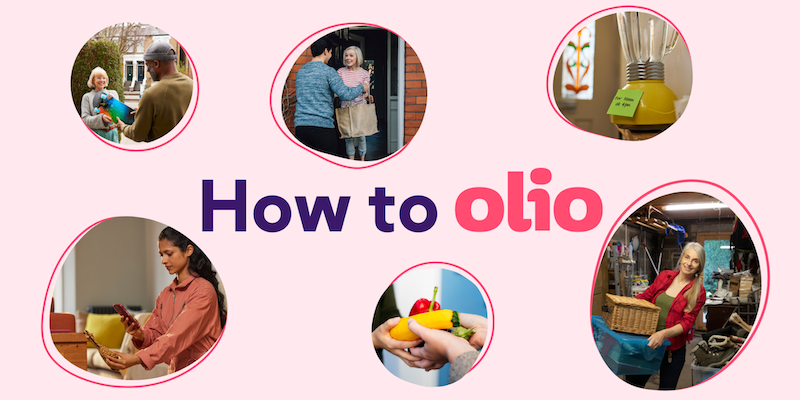
And that is exactly what the Olio app is. It connects people with their neighbours, so they can give away rather than throw away their spare food and household items.
How it works is really simple. Snap a photo, add your item to the app, then people living nearby get an alert. They can browse the listings, request what they want, and pop around and pick it up.
And you might be thinking, who on earth would want my slightly sad-looking lemons, or half a head of broccoli, or that bottle of shampoo you’ve used once and didn’t work?
But there’s no shortage of people who want your spare stuff. A typical household item is requested in four to eight hours. And a typical food item is requested in less than 30 minutes.
Our impact unlocked so far
So what impact have we unlocked so far? To date, we have had almost 10 million people join the Olio community, about half of whom are in the UK. We have had 140 million meals worth of food successfully redistributed via the platform, and 16 million household items.
That has had an environmental impact equivalent to taking over one billion car miles off the road. It has also saved over 44 billion litres of water from going to waste.
When my co-founder Sasha and I created Olio, we were motivated to solve the climate crisis at scale – because food waste globally is responsible for 10% of all greenhouse gas emissions.
What we didn’t realise at the time was that we’d have an equally profound social impact. Two-thirds of our community tell us that they have made friends through the app. And three quarters say that sharing has improved their mental health.
That’s been one of my major learnings on this journey. What is good for the people is good for the planet, and vice versa.
A proud B Corp business
We get very frustrated when people assume that we must be a charity. Olio is a business, and a proud B Corp. We generate revenues by charging businesses for the service we provide.
Olio has over 100,000 food-safety trained volunteers. Right now tonight, there will be thousands of people I have never met leaving their homes across the country going to their local supermarket to pick up unsold food. They will take it back to their home and give it away to their local community via the app.
During a cost of living crisis, it is incredibly powerful to make sure that food from businesses is being eaten, not sent off to waste streams.
Since starting work in 2015, we have faced lots of challenges. First of all, pretty much everyone didn’t believe it could work – that we could persuade strangers to share food. People certainly didn’t believe we could generate a business model from it.
Investor buy-in to our long-term vision
Funding and financing has always been very challenging. Being a female co-founded, tech-for-good, early revenue startup has not exactly had investors banging our door down. But we have raised over $50 million in funding. We have an incredible set of investors who are really bought into our long-term vision, which gives us cause for optimism.
It has been a long, hard slog to get to where we are.
I think it was Churchill who said,“never waste a good crisis”. Collectively and globally right now, we really are in a moment of crisis.
I’m hopeful that it will make us wake up and realise just how precious food and other resources are, and that we will stop wasting them, and we’ll really concentrate on sharing them.
As we say at Olio, it was billions of small actions that caused the climate crisis in the first place. By the very same logic, it will be billions of small actions that help get us out of it.
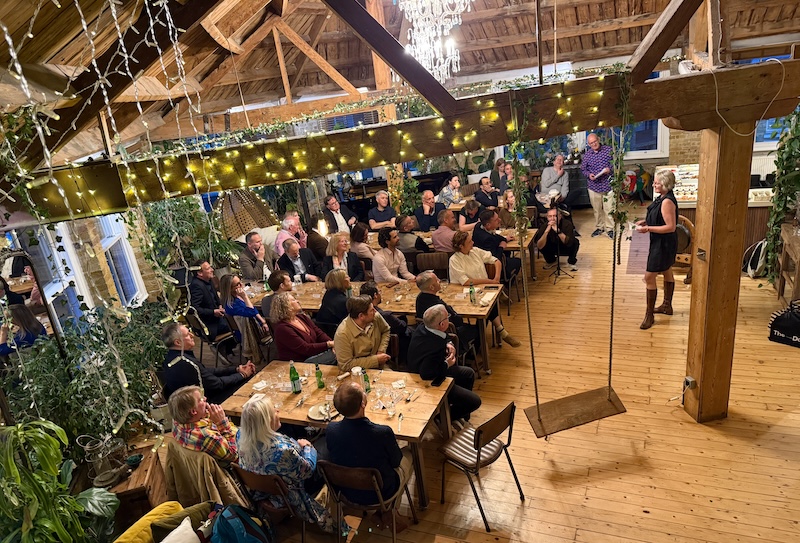
This post is based on a talk by Tessa Clarke at the launch of Impact Unlimited in London on 6 May 2026. Tessa is one of the speakers at our Impact Unlimited summit on 30 September.
Want to find out more? Sign up for our newsletter below.