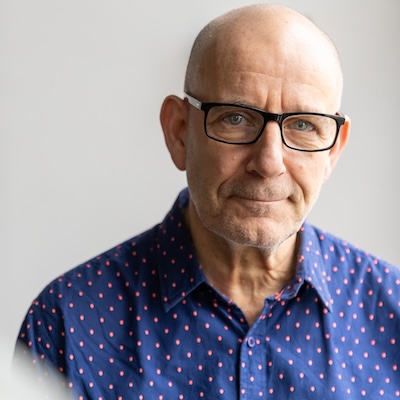
Speaking in London at last month’s Impact Unlimited Summit, Guy Singh-Watson (pictured) said: “a good business is a patient business. It’s an honest business, it’s a business that looks to enrich its staff.”
Singh-Watson, who founded Riverford in 1987 from his family farm in Devon, said: “My values were laid down very early by my parents. Running a good business is devoting yourself to trying to be useful. Now, ‘useful’ means different things to different people.”
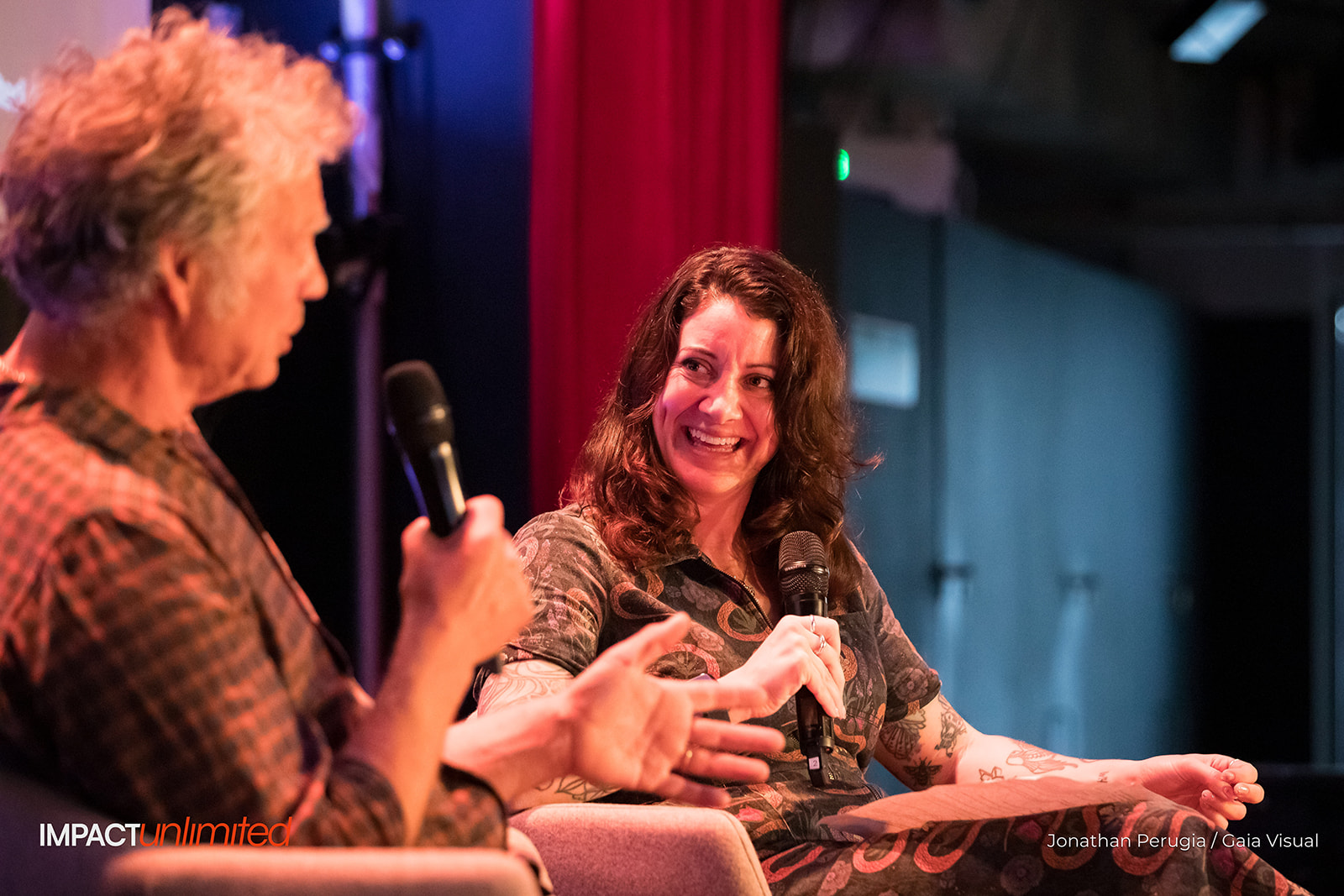
In a summit fireside chat, Hannah Cox, Founder of the Better Business Network, said the climate crisis had injected an urgency into the sustainability space, meaning that “patience is something a lot of us don’t tend to have when it comes to business”.
Singh-Watson argued that “if you look at things with a long enough timeframe, you often find that the commercial imperative and the environmental or social one do converge eventually. You’ve just got to be patient enough.”
‘No time for ESG and CSR’
In an outspoken talk, Singh-Watson said good businesses made “the right choices, as opposed to what just sounds like the right choices, which can be a very different thing.”
Asked by Cox whether frameworks designed to ensure that responsible business become the norm were “part of a system that’s the problem”, Singh-Watson was unenthusiastic.
“We are a B Corp. I’ve got no time for ESG or CSR,” he declared. After speaking at conferences for 20 years, he had concluded that such acronyms largely “stand for bollocks”.
He agreed that doing good was about practical decisions grounded in evidence, even when they challenged customer expectations or cost the business money. Riverford had, for example, decided against selling fresh produce grown in heated UK glasshouses because of its environmental impact.
“You’re much better off buying a tomato from Spain in January,” he said. “It’ll probably taste better and have a fifth or a tenth of the carbon footprint.”
Rather than offering easy answers, Riverford had invested in research and communicating “uncomfortable truths” to its customers. That commitment had strengthened the business commercially.
“As a result you know we are authentic and people trust us,” he said. “That trust has meant that people recommend us to their friends. When we get it wrong it’s bought us a bit of forgiveness and sometimes a bit of time to get it right.”
Singh-Watson’s readiness to challenge conventional business thinking has often ruffled feathers. He recalled being described as “boring and parsimonious” by Abel & Cole founder Keith Abel after rejecting a proposed merger involving £34 million of debt.
Nor had he avoided expressing opinions in Riverford’s customer communications, despite occasional complaints from people “who don’t want politics from their greengrocer”.
Government and agency ‘dysfunction’
Singh-Watson criticised the frequent turnover of government ministers and “totally dysfunctional” environmental institutions. “Who could run a business with that sort of disarray and turnover and all the chaos that inevitably goes with it?”
Cox said the government should be doing more to make it easier to be a good business in the UK. “A lot of the work the Better Business Network does is around how we galvanise as a collection of businesses to tell the government what they can do to make it easier for us to be better.”
In a talk with strong opinions, Singh-Watson saved his strongest for honesty. If politicians were found to lie, he said “it should be the end of your career”. He said he would also include under lying “willfully misleading” the packaging of fresh chickens by supermarkets.
Without higher standards of truthfulness, he warned, trust in business and democracy would continue to deteriorate.
Guy Singh-Watson was talking to Hannah Cox about ‘doing good becoming business as usual’ at the Impact Unlimited Summit on 30 September. View the talk on YouTube.
Photography and video by Gaia Visual.